
Five Questions With…Yasmin Santos, Altar Native
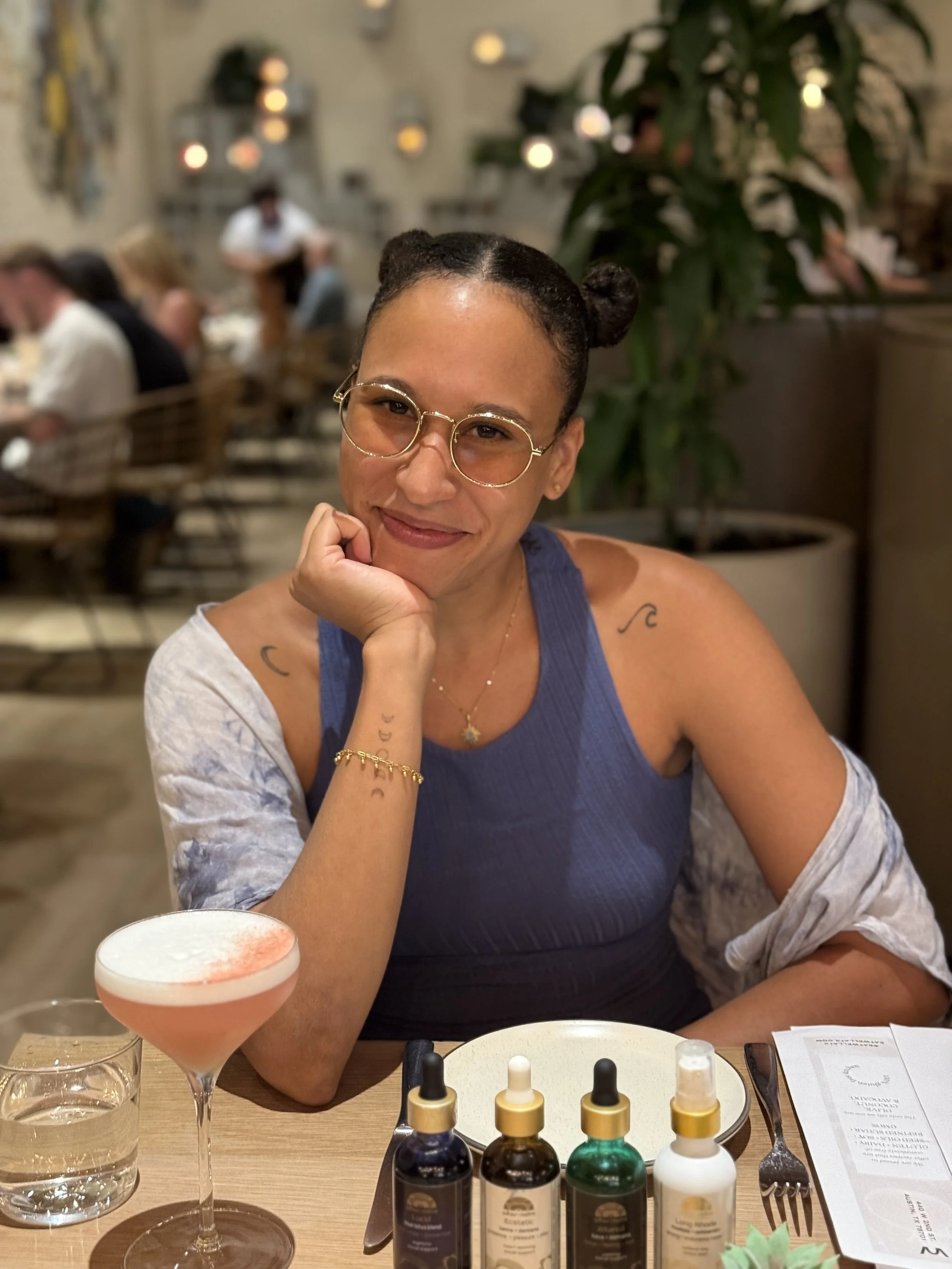
A millennial NA founder on growing up in South Florida party culture, discovering plant-based medicine during her hardest years, and learning to drink on her own terms.
Where are you from, and what was your inspo for Altar Native?
I am originally from South Florida. We were teenagers with a lot of freedom, access, and resources. The statute of limitations is long past so I’m willing to share this. Partying with drugs and alcohol every weekend was a given, and alcohol was rarely in short supply. By the time I was a junior in high school, I was planning parties with paid admission and providing booze. I was also an AP student with a job, two internships, and extra-curriculars. My mantra was “do things right, so you have the right to do things wrong.” It’s ironic that the girl who used to get everyone drunk now runs an NA brand.
My inspiration for Altar Native began when I became my mother’s legal guardian and caregiver. The stress of the responsibility took its toll on my health, so I quit drinking to help my body heal. But I really needed something to ease the stress, grief, and pain. And so did mom. She became bedridden and was in obvious discomfort, but neither of us were big fans of big pharma. So I prayed for a solution. The answer I heard was “the plants are there for you.” Which led me to discover the concept of herbalism. I learned there are thousands of plants that have been used for thousands of years to ease the human experience. I purchased three tinctures: kava, kratom, and CBD.
Kratom and CBD worked for mom, while Kava felt supportive for me. I began carrying a small bottle of kava drops with me wherever I went. After my mom passed, I moved to Austin. Many of my new friends knew about Kava and always wanted some, so I started bringing bigger bottles and mixers.
At the time, I was working at Meta and doing freelance marketing. I was financially stable, and had work/life balance. But I felt called to do more, so again I prayed. After several months, the idea for Altar Native came rushing in. I launched it as a cater bar in 2024, served dozens of events, then pivoted to products after several people asked for them.
Who did you create the brand for, specifically?
Like many great brands, Altar Native was born to fill my own need. I am an overwhelmed millennial who wants to unwind without compromising my health. So are the majority of our customers, though age and lifestyle vary greatly. We like to say that Altar Native was made for the freethinking, life-loving, earth-honoring dreamers, lovers, artists, and athletes. And anyone seeking a better alternative.
What do you think is misunderstood about alternative, holistic medicines?
I think the greatest misconception is that it’s all inherently dangerous because it’s not regulated or well-studied by institutional standards. But the reality is that properly administered herbalism and traditional medicine are far more studied and effective, it’s been used and studied for thousands (perhaps millions) of years by ancestors. The problem is that you can’t patent a plant, so profit becomes a problem. What tickles me the most is that nearly every pharmaceutical is derived from nature; plants, animals, fungi, microbes, and so forth. The active compounds are isolated and sometimes synthesized. My issue with this is that nature is intelligently-designed. A plant can have hundreds of compounds that all work in tandem, so when you isolate a specific one, you might be omitting a necessary chemical that prevents an undesirable outcome, that a researcher may not even be aware is taking place. I think that’s the main reason synthesized substances have so many side effects, the intelligent nature is being stripped away. Second, because herbal remedies often work subtly, people often feel like they’re “less effective,” when in reality it’s working to resolve the root cause rather than mask the symptoms, and that takes time and intention.
Was there a specific moment (or drink) that made you think differently about alcohol?
The memory that comes to mind is so subtle. It wasn’t some dramatic, rock bottom moment. I was 22 or 23, living in Boca Raton, working, and in the legal process of becoming my mom’s legal guardian. My boyfriend was a “yachtie”, he worked on a very large motor-yacht based in West Palm Beach. The yachting industry is notorious for heavy drinking. Believe it or not, Below Deck, the reality show about yachts, doesn’t sail too far from reality. Nearly every evening we’d end the day with drinks or dinner and drinks. This particular day we were having a braai (a BBQ) out by the boat. It was the first few weeks I had cut down on alcohol for my health. Everyone was having beers and hard seltzers, but my boyfriend quietly handed me my favorite flavor of La Croix. I think it stands out for a number of reasons. For one, it was a moment I felt cared for in a time I was doing a lot of caregiving. But I also remember feeling a slight shame for being the only one not drinking. It dropped me into a deep reflection where I looked around and questioned why my lovely friends required a drink every single day. It felt…broken. Like we’d inherited a culture that didn’t care about health or wellbeing. Why was I feeling guilty for making healthy choices? It was weird. I liked alcohol, it was still fun for me then, I just didn’t want to drink every day, and somehow that wasn’t ok. It got me thinking.
What does mindful drinking mean to you?
For me, mindful drinking means having agency over your being and your experience. It’s having the freedom and fortitude to choose what’s best for you at any given moment. And also the option to choose from a menu that includes more than soda and lemonade as non-alc options, and people who don’t pressure you to consume something unless you really want to. Craving a cocktail? Beckoning for a beer or glass of bubbly? Lovely. I love a good craft cocktail, IPA, or prosecco…when I feel like it. Which honestly, isn’t often. I’d much rather have an adaptogen drink that brings me ease and supports my body, mind, and spirit.