
Bridging The Cultural Divide In Beverages
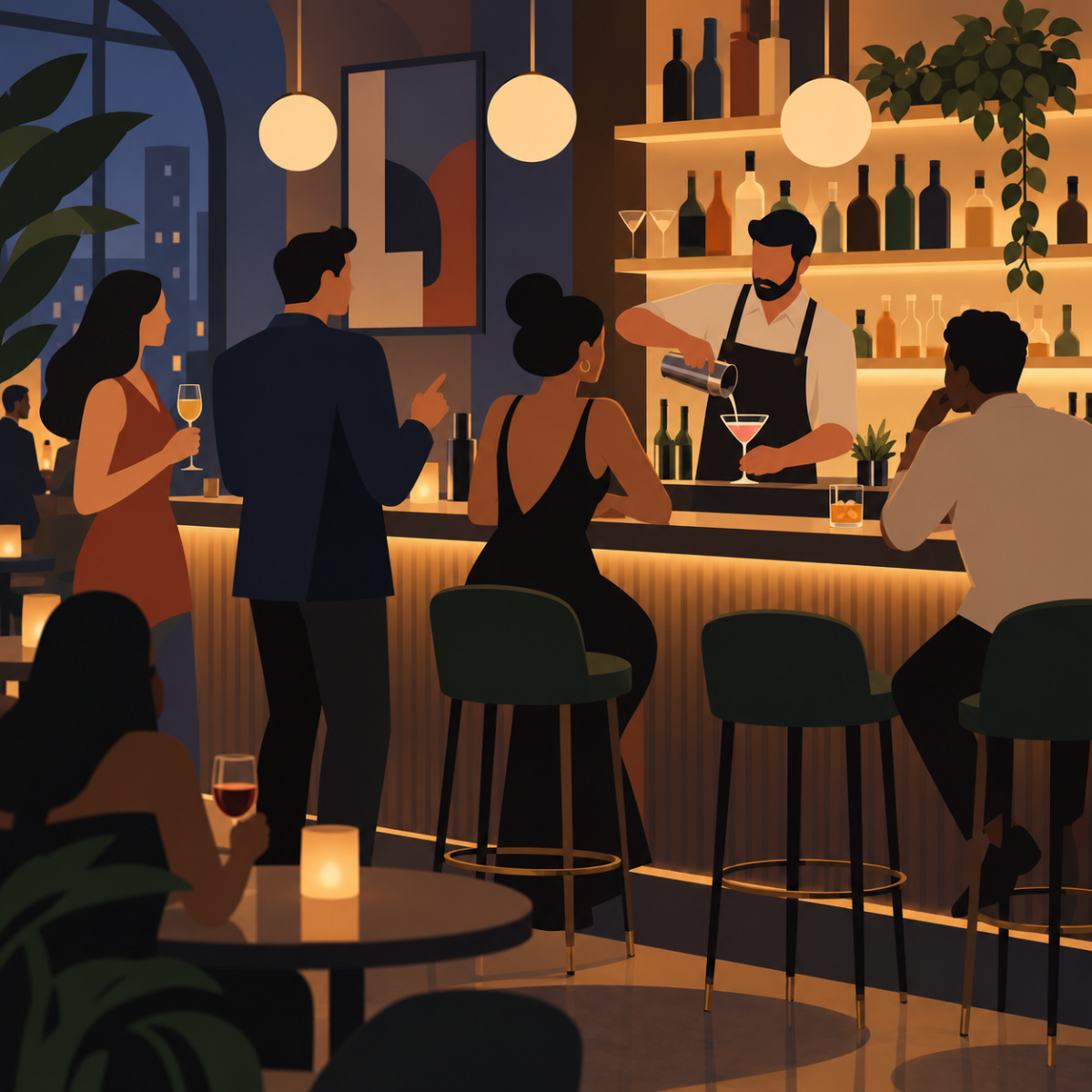
Non-alcoholic drinking has crossed into the mainstream. So why does ordering one still sometimes feel like it needs an explanation?
Walk into almost any bar in America right now, and you'll more than likely find a non-alcoholic option on the menu. That alone would have been unthinkable even a decade ago. Even if it’s a lonely macro NA beer option like Heineken Zero, or maybe an Athletic Free Wave sitting underneath the IPA section. Zero-proof spirits sitting alongside their full-alcohol cousins behind the bar. Bartenders building a proper mocktail instead of offering you a juice or soda. By nearly every measure, non-alc has arrived.
And yet. Ask around, and you'll still hear stories of someone ordering a non-alcoholic beer at a work dinner, or asking for a mocktail at a wedding, and getting "the look. The "you okay?" look. The assumption that something must be wrong, or there must be an unpleasant story there rather than the far more boring truth that they just didn't feel like drinking that night (or round). The product category has perhaps modernized faster than the etiquette around it.
That gap was a central theme in our recent U.S. of N/A conversation with Derek Brown, founder of Drink Company and the Mindful Drinking Fest, and arguably the closest thing the movement has to a face. Brown has spent his career on both sides of the bar, first as one of the country's most respected bartenders and sommeliers, and now as the person hotel groups and hospitality brands call when they want to build a world-class NA program that doesn't feel like an afterthought.
Despite the stigmas still present, they’re not evenly distributed across generations. Younger drinkers, raised on wellness culture and seeing beverages more by taste and function than drinking occasion, see no stereotypes or baggage around it. It's older generations, the ones who came up in a drinking culture where declining a round meant a violation of the social contract, where the discomfort tends to linger. For them, choosing non-alc in front of peers can still read as a statement rather than a preference, even when it's not intended to be either.
Brown's answer to that gap isn't a messaging campaign or a new ingredient. It's simpler, and arguably harder: operators need to stop treating non-alcoholic drinks as a special case. In the context of describing how the rest of the world has made a place for non-alcoholic drinks throughout history, "don't make it weird," he told us.
It's a small phrase doing a lot of work. Every time a server confirms you intended to order something without alcohol after an NA order, a bar decides not to even mention zero proof options, or the menu slaps a cutesy "mocktail" label on a drink that took real craft to build, the industry reinforces the exact stigma it claims to be moving past. Normalizing non-alc isn't just a product problem anymore. It's a hospitality problem, specifically one about training, menu design, and plain old service instinct.
The category has already won the argument on quality. What's left is the harder, slower work of winning the argument on culture. Making sure that ordering the NA option feels as unremarkable as ordering anything else. Bridging that divide won't happen through better branding alone. It'll happen one un-awkward pour at a time.
Want to hear more from Derek Brown on mindful drinking, hospitality, and what's next for NA culture? Check out our full conversation on the U.S. of N/A podcast, available on Spotify, Apple Podcasts, Pocket Casts, or wherever you consume your content.